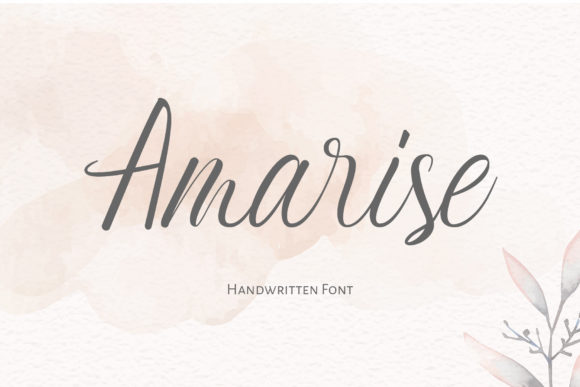
Amarise Font for Web Design
Amarise is a stylish and dainty script font that brings elegance and personality to digital design. As a Script Handwritten font, it offers a unique blend of fluidity and refinement, making it ideal for web designers and UI creators who want to elevate their typography. Whether you're working on a website header, a logo, or a branded landing page, Amarise adds a touch of sophistication that enhances the overall user experience.
Amarise for Creative Portfolios and Branding Projects
Amarise is a premium font that works exceptionally well in creative portfolios and branding projects. Its delicate strokes and flowing curves make it perfect for showcasing personal work, online resumes, or professional brand identities. When used in a portfolio site, Amarise can be applied to section headings, project titles, or client testimonials, creating a visual rhythm that guides users through the content. Pairing it with a clean sans serif font like Open Sans or Lato ensures readability while maintaining a modern aesthetic.
For branding projects, Amarise provides a soft yet memorable presence. It’s ideal for logos, social media graphics, and digital ads where a handwritten feel adds authenticity and warmth. The font's versatility allows it to adapt to different color schemes and backgrounds without losing its character, making it a reliable choice for any brand identity system.
Amarise for Online Store Banners and E-Commerce Design
As a Script Handwritten font, Amarise is an excellent choice for online store banners and e-commerce design. It adds a sense of luxury and craftsmanship to product pages, especially for boutique stores or artisanal brands. When used in hero sections or promotional banners, Amarise can draw attention to key messages such as "New Arrivals," "Limited Edition," or "Exclusive Collection." Its dainty style pairs well with bold, minimalistic layouts, creating a balanced and visually appealing design.
On mobile screens, Amarise maintains clarity and legibility, which is crucial for small text on buttons or call-to-action areas. When designing for dark backgrounds or image overlays, consider adjusting the font size and spacing to ensure it remains readable. For example, using a slightly larger size with more line height can help the text stand out against complex backgrounds.
Amarise for Blog Headers and Content Sections
Amarise is a versatile font that can enhance blog headers and content sections, adding a touch of personality to written content. When used in blog headers, it creates a strong visual anchor that captures attention and sets the tone for the article. Pairing it with a simple serif or sans serif font for body text ensures a harmonious design that supports readability and user engagement.
In content sections, Amarise can be used for subheadings, pull quotes, or decorative accents. Its elegant flow makes it ideal for highlighting key points or introducing new topics. However, it's best reserved for short phrases rather than long paragraphs, as its intricate details may reduce readability when used in large blocks of text.
Amarise for Social Media Graphics and Digital Ads
As a stylish and dainty script font, Amarise is a great option for social media graphics and digital ads. It adds a handcrafted feel that resonates with audiences looking for authenticity and creativity. Whether you're designing Instagram posts, Facebook banners, or LinkedIn headlines, Amarise can help your content stand out in a crowded digital space.
When using Amarise in digital ads, keep the text concise and focused. Short phrases like "Join the Movement" or "Discover More" can benefit from its graceful curves, while longer copy should be paired with a complementary font for clarity. Testing different sizes and colors on various platforms ensures that the font remains legible across different devices and screen sizes.
Amarise for Logo Design and Visual Identity
Amarise is a powerful tool for logo design and visual identity systems. Its script style gives it a personalized and artistic feel, making it suitable for businesses that want to convey creativity, elegance, or individuality. When used in a logo, Amarise can be combined with icons, symbols, or other typographic elements to create a cohesive brand identity.
For visual identity, Amarise can be integrated into stationery, packaging, and digital assets. Its versatility allows it to work in both digital and print formats, ensuring consistency across all brand touchpoints. When choosing a font for a logo, consider how Amarise will look in different weights and styles, and ensure it aligns with the brand’s overall tone and message.
Amarise for Landing Pages and Conversion-Focused Layouts
Amarise is a valuable asset for landing pages and conversion-focused layouts. Its dainty style can add a sense of trust and professionalism, making it ideal for SaaS startups, coaching websites, or course sales pages. When used in headlines or call-to-action buttons, Amarise can help create a visual hierarchy that guides users toward the desired action.
However, it's important to use Amarise strategically. Overusing it in multiple sections of a landing page can dilute its impact. Instead, focus on using it in key areas such as the headline, subheadline, or CTA button. Combining it with a neutral font for body text ensures a clean and functional layout that supports user engagement and conversions.
Amarise for Digital Brand Kits and Design Assets
Amarise is a must-have font for digital brand kits and design assets. It adds a refined touch to templates, presentations, and marketing materials, helping to maintain a consistent and professional look across all platforms. Whether you're creating a brand guideline document or a set of social media templates, Amarise can serve as a central element that ties everything together.
When building a digital brand kit, consider including multiple variations of Amarise, such as regular, bold, or alternate styles, to provide flexibility for different design needs. Ensure that the font is available in common file formats like OTF or TTF, and check for webfont availability if it will be used on websites or apps. Also, verify that the font includes multilingual support if your brand operates in multiple regions.