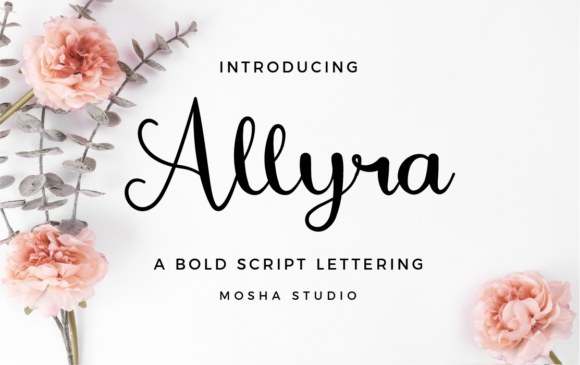
Allyra: A Delicate Script Font
There I was, staring at a blank brand board, trying to find the right visual voice for a new boutique skincare line. The client wanted something fresh, something that felt personal and elegant. That’s when I reached for Allyra, a lovely and delicate script font that exudes elegance and class. It wasn’t just about aesthetics—it was about finding a typeface that could carry the brand’s personality without overpowering it.
Allyra for Brand Identity and Logo Design
Allyra is a lovely and delicate script font that exudes elegance and class. When I first tested it on a logo concept, I was struck by how effortlessly it balanced charm with sophistication. It didn’t feel overly ornate or hard to read, which is a common pitfall with many handwritten fonts. For a brand identity project, Allyra brings a sense of warmth and authenticity that can be hard to achieve with more rigid typefaces.
I paired it with a clean sans serif for contrast, and the result was a logo that felt modern yet grounded. The subtle swashes and flowing lines gave it a softness that worked well for a skincare brand—something that felt approachable but still professional.
Allyra for Packaging and Product Labels
When I moved to packaging mockups, Allyra proved to be a strong choice for product labels. The font’s delicate structure held up well on small surfaces, and its legibility remained intact even in tight spaces. It worked especially well for minimalist packaging designs where a single word or short phrase needed to stand out.
One thing I noticed was that Allyra thrives in environments where visual simplicity is key. It doesn’t demand attention, but it does add a touch of refinement that elevates the overall look. For a handmade shop or a boutique product line, Allyra can serve as a signature element that reinforces the brand’s aesthetic.
Allyra for Web Headers and Social Media Graphics
Testing Allyra on a website header gave me a different perspective. As a display font, it brought a sense of grace to the page, especially when used for hero sections or featured content. It looked great with bold background colors and minimal text, making it ideal for creative studios or editorial sites looking for a refined visual tone.
On social media layouts, Allyra added a personal touch. Whether it was an Instagram post or a Facebook banner, the font felt like a natural extension of the brand’s voice. It worked best when paired with simple, clean backgrounds so the typography could take center stage.
Allyra for Business Cards and Printed Materials
Allyra’s performance on business cards was another highlight. The font’s fine details didn’t get lost in print, and it maintained a level of clarity that made it easy to read even at smaller sizes. For a local restaurant or a small business owner, Allyra can be a powerful tool in creating a memorable visual identity.
I found that using it for a single line—like a name or tagline—gave the card a polished finish. It also paired well with a thicker weight of a serif font, creating a balanced and professional look that worked across both digital and physical formats.
Allyra for Editorial and Commercial Design Assets
When I used Allyra in editorial design, such as a magazine spread or a flyer, it added a unique flair that stood out from more conventional typefaces. Its fluidity made it perfect for headlines or section titles, where a bit of character could enhance the reader’s experience.
However, I also noticed that Allyra isn’t the best choice for long blocks of text. In commercial design assets like brochures or reports, it’s better suited as an accent rather than a body font. That said, when used sparingly, it can add a touch of personality without sacrificing readability.
For designers working on a creative studio identity or a handmade shop branding project, Allyra offers a versatile option that can be adapted to various applications. It’s not a one-size-fits-all solution, but when used thoughtfully, it can elevate the entire visual language of a brand.
Allyra for Font Pairing and Typographic Harmony
One of the most valuable lessons I learned while working with Allyra was the importance of font pairing. As a script handwritten font, it naturally complements serif and sans serif typefaces that offer a contrasting structure. A classic serif like Baskerville or a modern sans like Montserrat can create a dynamic balance that feels both cohesive and intentional.
For web design, Allyra works best as a headline font. It pairs well with other premium fonts that have a similar tone, allowing for a seamless typographic hierarchy. When designing for a website or a social media layout, it’s important to test Allyra at different sizes and weights to ensure it remains legible and visually appealing.
Before finalizing any design, I always recommend testing Allyra in real-world scenarios. Whether it’s a printed card, a packaging label, or a digital banner, seeing how the font performs in context can make all the difference. This is especially true for Fonts that rely heavily on their visual character, like Allyra.
Finally, a practical note: always check the commercial licensing terms before using Allyra in client work. While it’s a beautiful typeface, proper usage rights are essential for protecting both your work and your clients’ brand integrity.